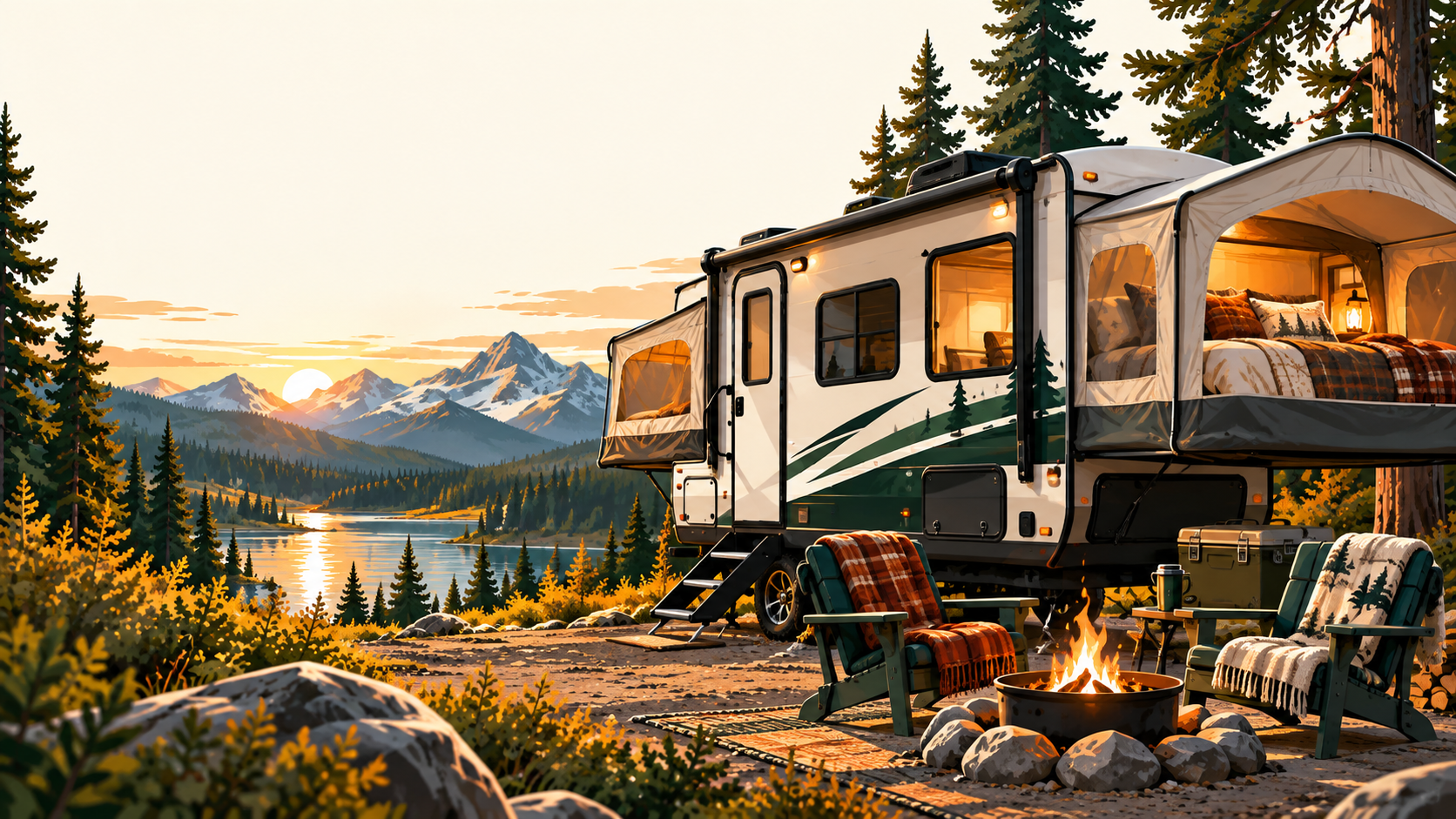
For cool-weather hybrid camping, reduce bunk-end heat loss, preserve ventilation, keep the mattress platform dry, and match any electric bedding or supplemental heat to the power source you actually have. Do not rely on one heater to solve every comfort problem.
Know what gets colder first
Canvas bunk ends and exposed bunk decks lose heat faster than fully insulated trailer walls. The sleeping areas can feel cold even while the centre of the trailer is reasonably comfortable.
Start by improving the bunk envelope and sleep surface rather than simply turning the thermostat higher.
Use shore power strategically
When reliable campground power is available, direct bed warmth can be efficient because it heats the sleeper instead of the entire tent-end volume. Verify the product load, outlet condition and instructions before use.
Off-grid, the same appliance may consume more battery energy than expected once inverter losses are included.
Moisture management belongs in the plan
Cold-weather comfort and condensation are linked. More occupants, wet gear and cooking add humidity while cool canvas and bunk decks create condensation surfaces.
Use controlled ventilation, dry wet items when possible and inspect hidden surfaces such as the underside of the mattress.
Treat the weather as a limit, not a challenge
Hybrid trailers vary widely in furnace capacity, plumbing exposure and manufacturer cold-weather guidance. Check the forecast and the trailer manual before pushing into temperatures the trailer was not designed to handle.
Protect people first. Reliable alarms, proper appliance use, safe clearances and a backup plan matter more than squeezing another few degrees of comfort from the bunk.
Quick answers.
Can you camp in a hybrid trailer in cold weather?
Many owners camp comfortably in cool conditions, but capability varies by trailer design, plumbing exposure, furnace capacity and manufacturer guidance. Use the trailer manual and forecast to set limits.
What is the best way to heat a hybrid trailer bunk?
A layered approach usually works better than one large heat source: reduce bunk heat loss, keep the mattress dry and use approved direct sleeper heat when the available power supports it.
Is an electric blanket or heated mattress pad useful in a hybrid trailer?
It can be useful on reliable shore power when the product fits the mattress and is used according to its instructions. Off-grid use requires careful power planning.
Use your saved trailer context.
Trailerstead can connect this decision to the trailer you actually own.