
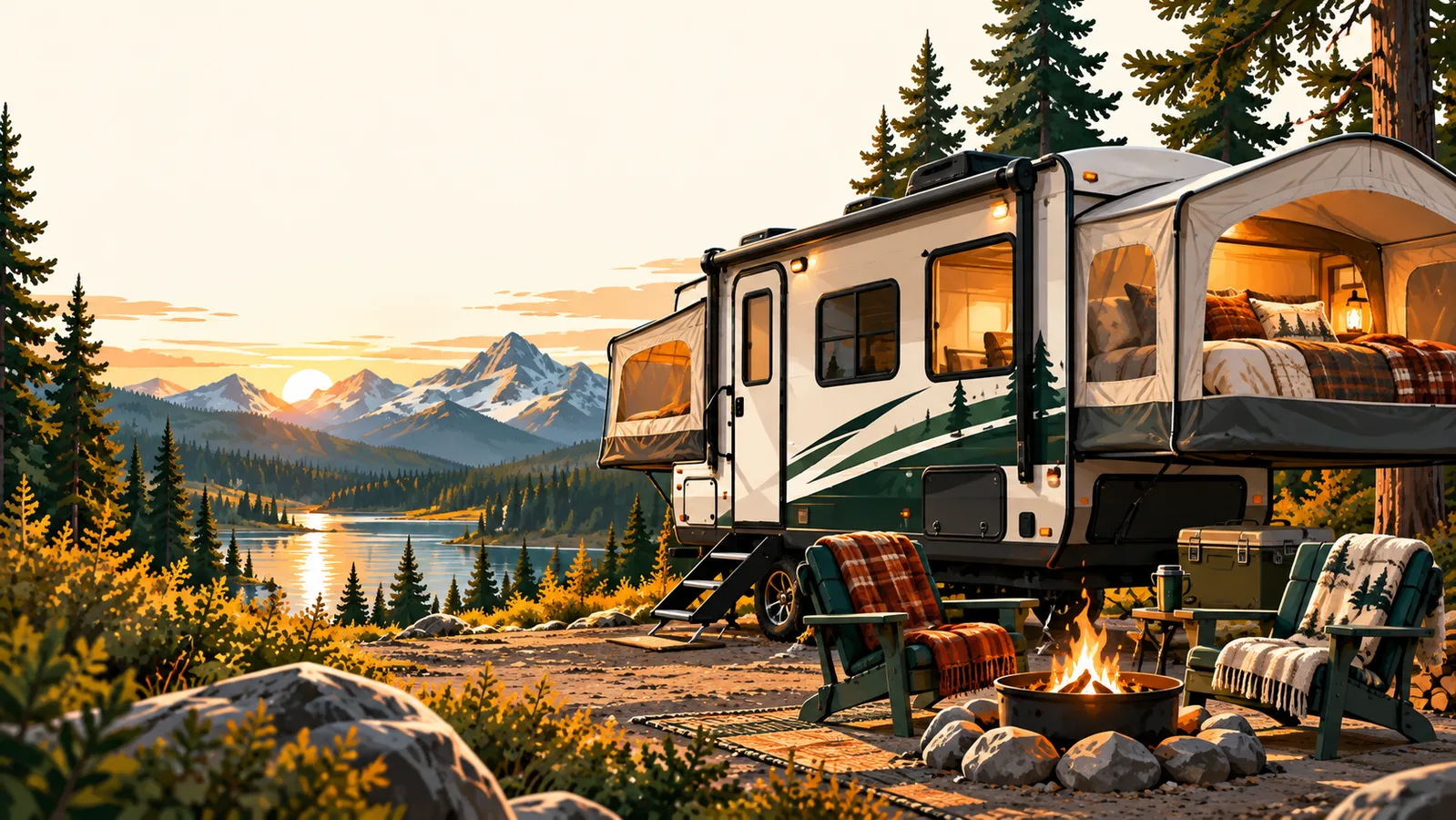
Start with the exposed bunk roof and tent-end surfaces, using a removable solution that fits safely and preserves ventilation and egress. Purpose-built exterior covers are the cleanest option; DIY reflective barriers can help when installed with realistic expectations and regular moisture checks.
Exterior bunk covers attack the most exposed surface
The bunk roof is directly exposed to night sky cooling, wind and rain. A fitted exterior cover can reduce that exposure and can also help with summer solar gain.
Fit matters. The cover should remain secure without damaging tent material, interfering with drainage, or creating a setup that is difficult to remove when weather changes.
Interior liners improve comfort closer to the sleeper
Interior insulating liners can reduce the cold-surface feeling around the bunk and are often easier to leave in place than improvised panels. They still need to preserve windows, ventilation and emergency egress.
Think of liners as one layer in a system rather than a complete replacement for heating or moisture management.
Reflective insulation is not magic R-value
Reflective products can reduce radiant heat transfer when used in an appropriate assembly, especially when there is an air space. Their labelled R-value can depend heavily on installation.
A removable DIY panel can be useful for experimenting with problem areas, but tightly pressing reflective material against damp canvas is not the same as building an insulated wall.
Insulate the bunk and inspect it
Any insulation strategy should include a habit of checking hidden surfaces. Look behind liners, around mattress edges and beneath the mattress after cold nights.
If a solution keeps you warmer but leaves fabric or bedding persistently wet, the system needs more airflow or a different installation approach.
Quick answers.
Do reflective bunk inserts keep a hybrid trailer warmer?
They can reduce some heat transfer, particularly when installed with an appropriate air space, but performance depends on the installation and they do not replace safe heating and moisture control.
Are exterior bunk covers better than interior insulation?
They solve slightly different parts of the problem. Exterior covers reduce exposure at the outer bunk surface, while interior liners can improve comfort around the sleeping area.
Can I leave bunk insulation installed all season?
Only if the product and trailer setup allow it safely. Continue checking for trapped moisture, blocked openings, wear and interference with bunk closure.
Use your saved trailer context.
Trailerstead can connect this decision to the trailer you actually own.