Position before you commit
Check slide clearance, awning space, utility reach and the path back out before disconnecting. A few minutes of positioning can prevent having to hitch up and move the trailer again.
 TrailersteadGet My RV Gear Plan
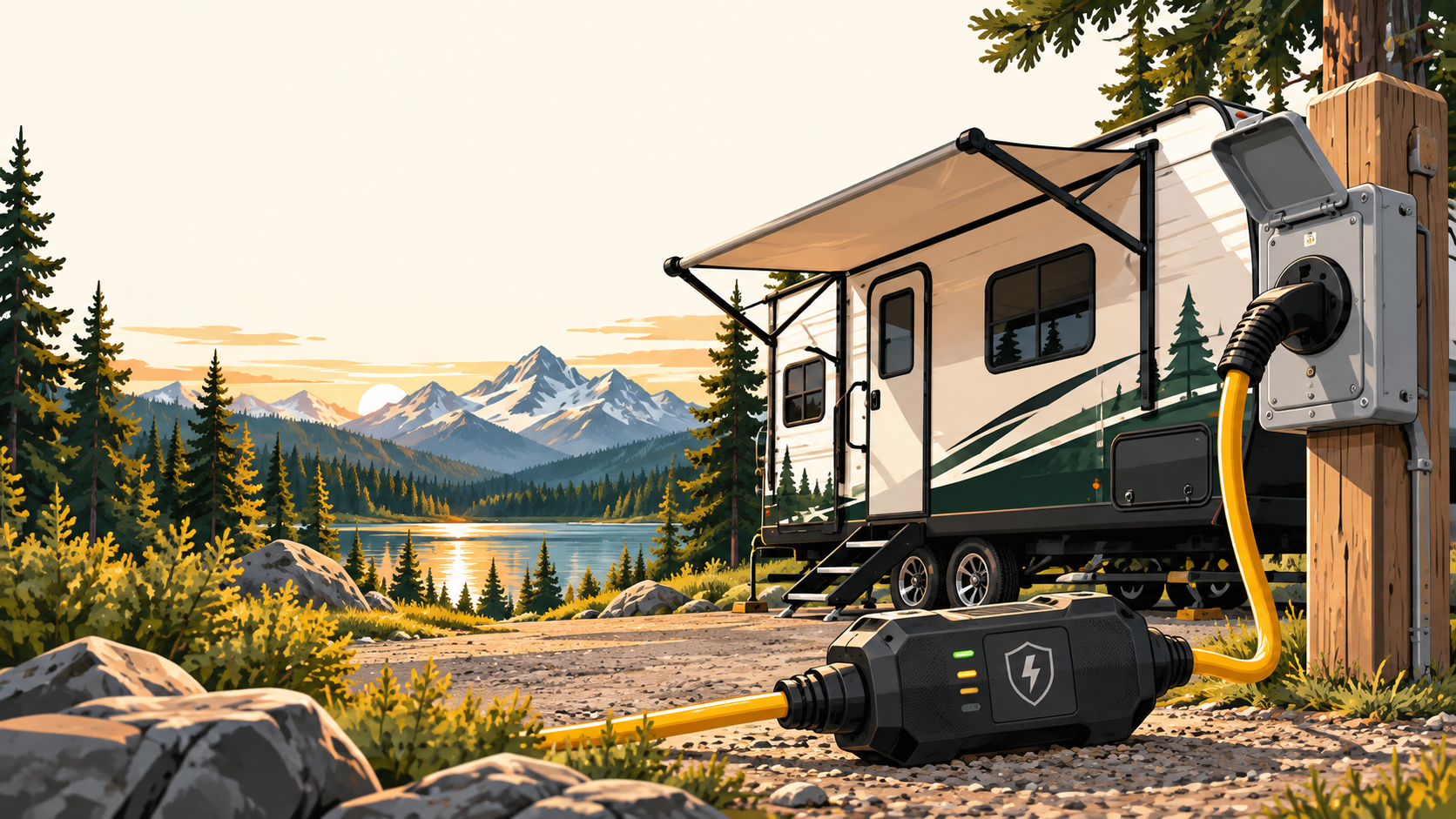
The easiest campsite setup is not a bigger gear pile. It is a repeatable order of operations: position, level, chock, stabilize as appropriate, then connect power, water and sewer.
Trailerstead groups related guides and owner tools by the job you are trying to solve, so you can move from understanding the problem to checking fit and taking action.
Check slide clearance, awning space, utility reach and the path back out before disconnecting. A few minutes of positioning can prevent having to hitch up and move the trailer again.
Leveling addresses an uneven site. Wheel chocks help resist rolling. Stabilizer jacks reduce movement after the trailer is positioned. Treating them as interchangeable can lead to poor setup decisions.
Power protection, fresh water and sewer each have their own fit and hygiene considerations. Keeping a repeatable connection and departure sequence reduces missed steps and cross-contamination.
These pages cover the decisions, checks and gear that connect to this topic.
Use the free arrival and departure workflow every time you camp.
Open →GuideUnderstand the different jobs before buying campsite setup gear.
Open →GuideChoose practical length, fittings and storage for waste-water handling.
Open →GuideKeep potable-water gear protected and separate from sewer equipment.
Open →GuideProtect the trailer before connecting campground power.
Open →A practical sequence is to position the trailer, level it, secure it against rolling, disconnect and stabilize as appropriate, then connect utilities using the checks required for each system.
No. Leveling blocks change height to compensate for an uneven site; wheel chocks are intended to resist tire movement while the trailer is parked.
Most travel-trailer stabilizers are intended to reduce movement after leveling, not lift the trailer into level. Follow the trailer manufacturer instructions for the specific jack system.
Tell Trailerstead what you tow, how you camp and what you already own. The planner will move the most relevant next steps to the top.